3 hr 30 min
Burgas Salt Lakes & Mud Bath Half-Day Trip
Soak in mineral-rich pink waters and wrap yourself in therapeutic black mud at Bulgaria's natural spa
Reserve

Hand-picked by our editors — only the best 5 experiences from 12 reviewed.
Verified partners for every tour, free cancellation where available, and instant confirmation on every booking.
3 hr 30 min
Soak in mineral-rich pink waters and wrap yourself in therapeutic black mud at Bulgaria's natural spa
Reserve
2 hr 30 min
Escape to Bulgaria's ancient salt marshes for natural mud therapy, black sand beaches, and wild coastal scenery.
Reserve
2 hr 30 min
Adults-only evening cruise along the Bulgarian coast with buffet dining, unlimited drinks, and golden-hour views of historic Nessebar.
ReservePrices from verified partners. Availability updates in real time at checkout. Free cancellation policies apply where shown.
The landmarks, rooms, and views travelers on this tour remember — all visible on a single visit.
The only museum in Eastern Europe showcasing solar evaporation salt production methods alongside 20 decares of active pans.
An ultrasaline lagoon that serves as a vital habitat for migratory birds and a natural wellness destination.
Centuries-old salt harvesting grounds where traditional Anhialo technology is still used for crystal collection.
The primary site for self-administered therapeutic mud treatments known for their mineral-rich, anti-inflammatory properties.
They complement each other; most visitors who do both call Atanasovsko Lake the more industrial and rugged choice, while Pomorie offers a more tranquil, heritage-focused wellness environment for those booking sunny beach salt lakes and mud baths tours.
| Feature | Top pick Pomorie Salt Pans | Atanasovsko Lake |
|---|---|---|
Access Type |
Public entry at lake edge | |
Mud Quality |
Iron-rich black healing mud | |
Facilities |
Minimal outdoor showers | |
Travel Time from Sunny Beach |
30–40 minutes | |
Crowd Levels |
Moderate and localized | |
Overall Atmosphere |
Quiet therapeutic retreat | |
| See tickets → |
Verdict: Choose Pomorie for a serene wellness soak, or select Atanasovsko Lake if you prefer the urban proximity of Burgas when arranging your sunny beach salt lakes and mud baths tour.
Choose your ticket, select your date, and reserve in under two minutes. Secure checkout handled by our verified partner.
Instant confirmation by email, with a mobile voucher you can save offline. No printing, no queuing at a collection desk.
Arrive at the entrance, show your voucher on your phone, and walk in. Most tickets include priority or skip-the-line access.
Practical details for your visit straight from our verified partners — hours, access, rules, and how to get there.
Wear old swimwear that you do not mind staining permanently, as the mud contains minerals that can ruin light-colored fabrics. Flip-flops or water shoes are highly recommended to navigate the slippery, silty bottom of the pools.
There is no formal security or bag storage at the Pomorie Salt Pans site. Visitors should bring only essential items and keep belongings in their vehicle or within sight while applying mud.
Photography is permitted in this open-air environment, offering unique shots of the pink-hued water and dramatic mud-covered silhouettes. Capture the salt production landscape, but be mindful of your equipment near the salt and mud.
The natural shore of Pomorie Lake is uneven and may present challenges for those with limited mobility. Visitors should exercise caution on the slippery paths surrounding the sunny beach salt lakes and mud baths.
Families are welcome to enjoy the natural, educational experience of the sunny beach salt lakes and mud baths together. Please monitor children closely near the water's edge as there are no lifeguards on duty.
There are no dining facilities at the immediate edge of the sunny beach salt lakes and mud baths, so bringing bottled water is essential. Stay hydrated, as the sun exposure while the mud dries can be intensive.
Best time to go, insider tips, nearby landmarks, and the cancellation fine print — flip through to skim what matters to you.
Flexible, no hidden fees.
Excursions booked through our partners offer full refunds for cancellations made at least 24 hours in advance. Entrance to the public mud and lye baths at the Pomorie Salt Pans is 0 BGN, meaning no cancellation is required for independent visits.
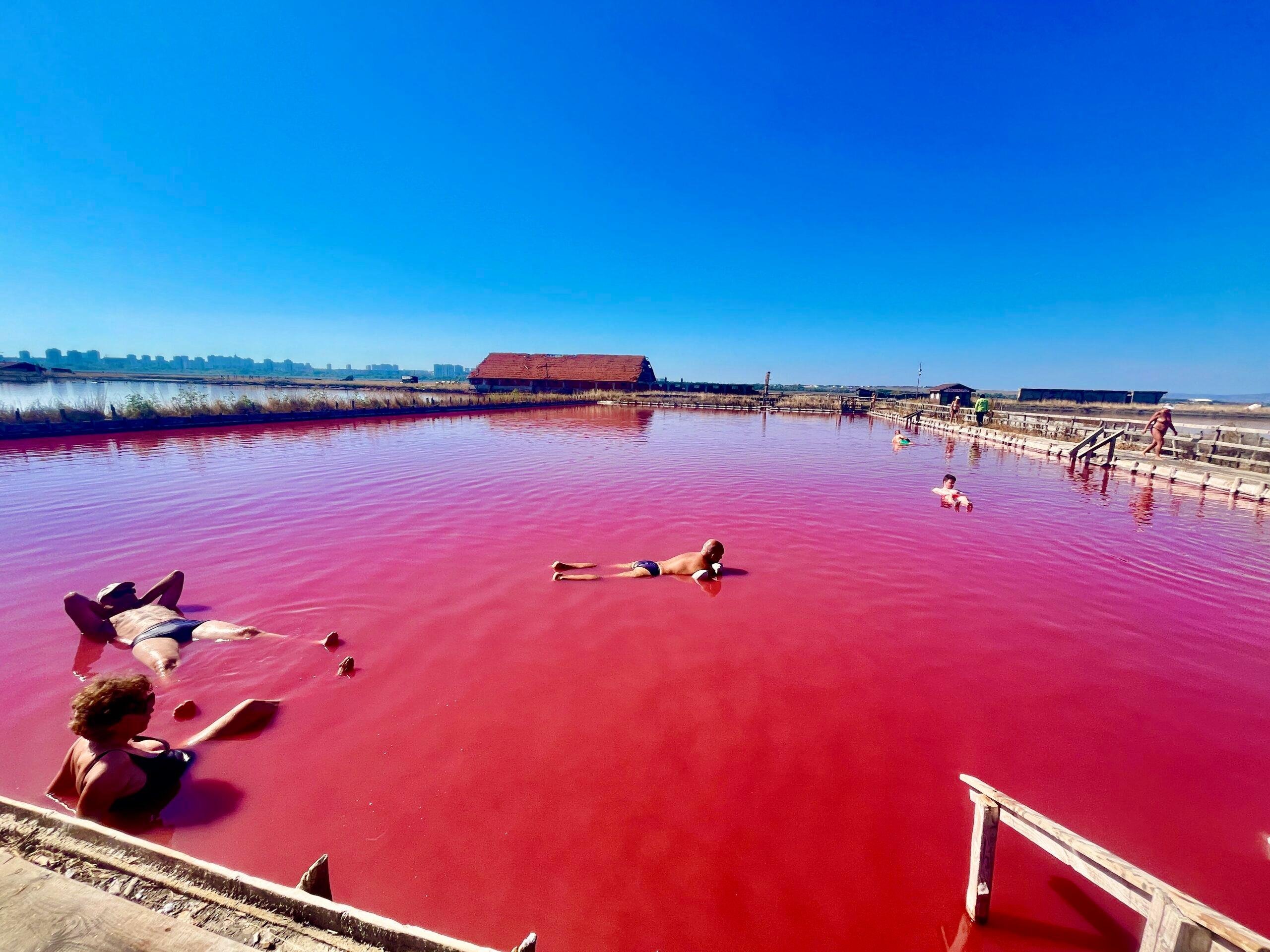
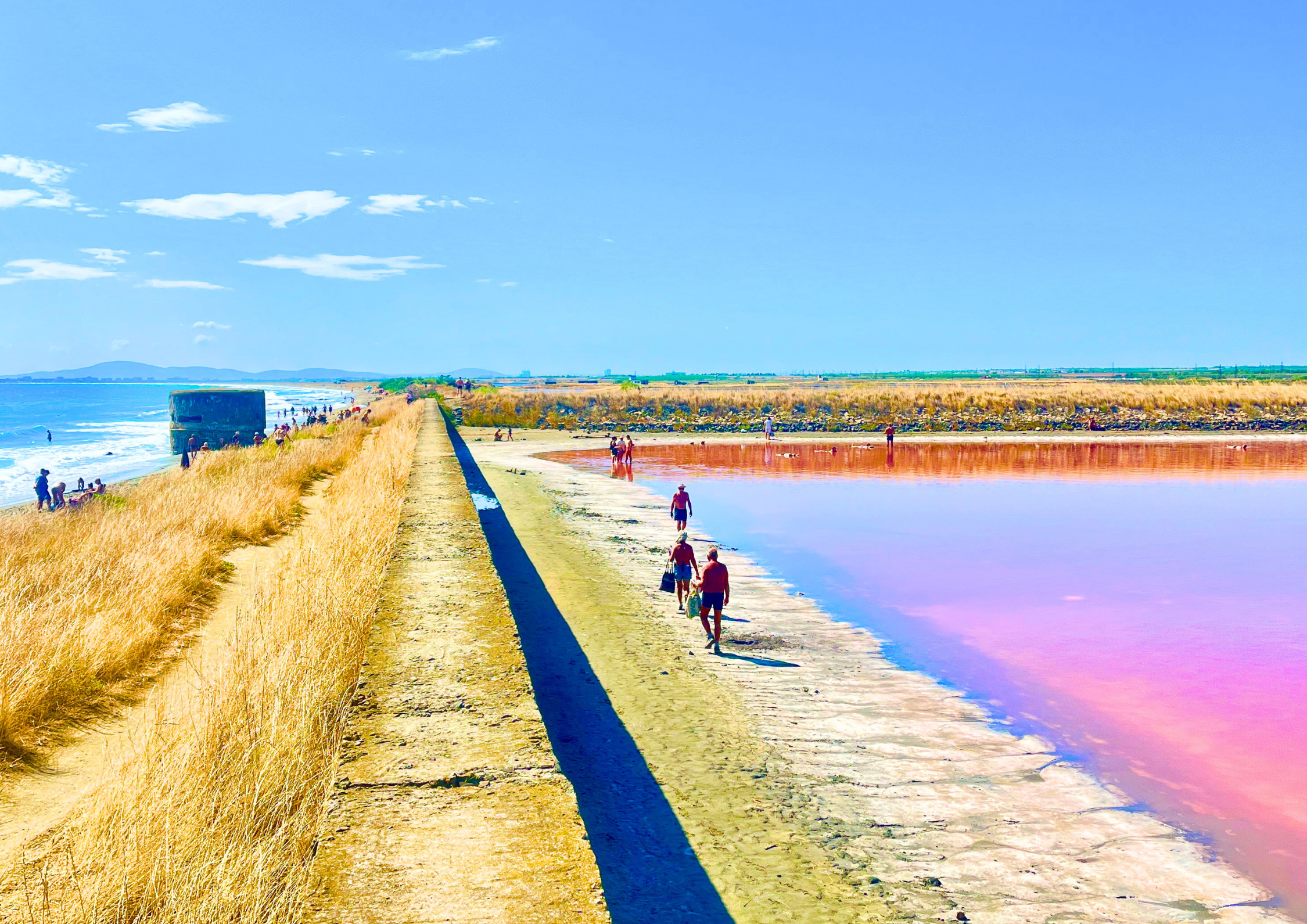
Pomorie Lake produces roughly 3,000 tons of sea salt annually using a method unchanged since Thracian settlers first channeled Black Sea water into shallow evaporation basins more than two millennia ago. The lake itself is a hypersaline lagoon separated from the sea by a narrow sand spit, its salinity reaching 28 parts per thousand in summer — nearly twice that of open seawater. When brine concentration peaks, the basin floor accumulates a thick layer of black sulfuric mud, prized since antiquity for its mineral density and used in modern balneotherapy clinics across Bulgaria. The northern shore of Pomorie Lake hosts a free-access public bathing zone where visitors coat themselves in the dark, odorous mud and wade into shallow lye pools to let the mineral slurry dry under the sun. The tradition draws both Bulgarian families and international visitors seeking relief from joint inflammation, skin conditions, and respiratory ailments. Dermatological studies conducted at Burgas Medical University between 2018 and 2023 documented measurable improvement in psoriasis and eczema symptoms following repeated mud applications, attributing the effect to sulfur compounds, magnesium salts, and trace elements including iodine and bromine. Salt production at Pomorie follows a cascade system: seawater enters the outer basins in early spring, evaporates through the summer months, and crystallizes into coarse gray salt by September. Workers rake the salt into conical heaps along the dikes, where it drains and dries before being bagged for table use and industrial processing. The pans themselves form a geometric patchwork visible from the cliffs above the town — rectangular cells divided by narrow earth berms, their surfaces shifting in color from pale jade to deep rose depending on algae blooms and mineral saturation. The site operates year-round, though bathing is most comfortable between May and October when air temperatures exceed 20°C and the mud warms quickly in direct sunlight. Winter months see reduced visitor numbers but continue salt production in sheltered pans. Local folklore holds that applying Pomorie mud during a waning moon enhances its therapeutic potency, a belief unsubstantiated by clinical data but persistent among older residents. The adjacent Museum of Salt, housed in a restored 19th-century production facility, preserves wooden rakes, wicker baskets, and hand-drawn carts used by generations of salt workers before mechanization arrived in the 1950s.
"The basin floor accumulates a thick layer of black sulfuric mud, prized since antiquity for its mineral density and used in modern balneotherapy clinics across Bulgaria."
A step-by-step walkthrough of the visit — what you'll see, how long each stage takes, and the details that matter.
You arrive at the northern shore of Pomorie Lake mid-morning, parking in the gravel lot where a weathered sign marks the public bathing zone. A short walk across sun-bleached planks brings you to the shore, where a dozen visitors are already wading in the shallows. You slip off your shoes and step into the warm, silky mud, scooping handfuls of the black paste and spreading it across your arms, legs, and torso. The sulfur smell is immediate and sharp. After coating yourself thoroughly, you wade into a shallow lye pool and sit on the smooth bottom, letting the sun begin its work. Within minutes, the mud tightens and cracks across your skin, pulling slightly as it dries. Twenty minutes later, you rinse in the lake's warmer shallows, the mineral film dissolving slowly as you rub your skin clean. Your body feels lighter, the salt residue leaving a faint tingle. You dry off on the shore, watching an elderly Bulgarian woman repeat the process for the third time that morning. Before leaving, you walk the perimeter of the nearest salt pan, peering into the pink-tinged water where brine shrimp pulse in dense clouds. A lone egret picks its way along the far dike. You return to your car by noon, skin taut and slightly flushed, the salt crystals still visible in the creases of your palms.
The public area for the sunny beach salt lakes and mud baths is accessible 24 hours a day, 7 days a week.
Entrance to the public mud and lye baths is 0 BGN (Free entry).
The best arrival window for the Pomorie Salt Pans is 08:00–18:00 for optimal natural light and mud drying conditions.
Yes, families can visit the Pomorie Salt Pans, though adult supervision is necessary near the water.
Bring old swimwear, a towel, water shoes, and plenty of water for your sunny beach salt lakes and mud baths tour.
You can reach the Pomorie Salt Pans via car or public bus heading to the north of Pomorie town.
While entry is free, you can book guided sunny beach salt lakes and mud baths tours for transportation and expert guidance.
The mineral-rich mud is traditionally used for therapeutic benefits; however, those with heart conditions should consult a doctor first.
The effectiveness of the mud drying decreases in windy or overcast weather, so consider rescheduling your sunny beach salt lakes and mud baths tour for a sunnier day.